September 9, 2026
You've got an old consent form as a PDF and no time to retype it — you don't have to
Switching from paper to digital usually means hours of retyping your own form field by field. It doesn't have to: upload the file, and the system recognises the questions, checkboxes and clauses on its own.
The biggest obstacle to moving from paper to a digital system isn't price or learning a new tool. It's the prospect of retyping your own form from scratch — the health questionnaire, the data-protection clauses, the list of contraindications you've refined for years — field by field, in some drag-and-drop builder.
Why that puts people off more than price ever does
The form you use today didn't appear in a day. It's years of small fixes made after real situations — a question about allergies added after one incident, a clause tightened after one complaint. Retyping that by hand into a new system isn't a half-hour job; it's a real risk of losing the one line that once saved you.
The result: studios stay on paper not because they don't see the point of going digital, but because the cost of switching looks higher than the cost of staying put.
What it looks like with automatic form recognition
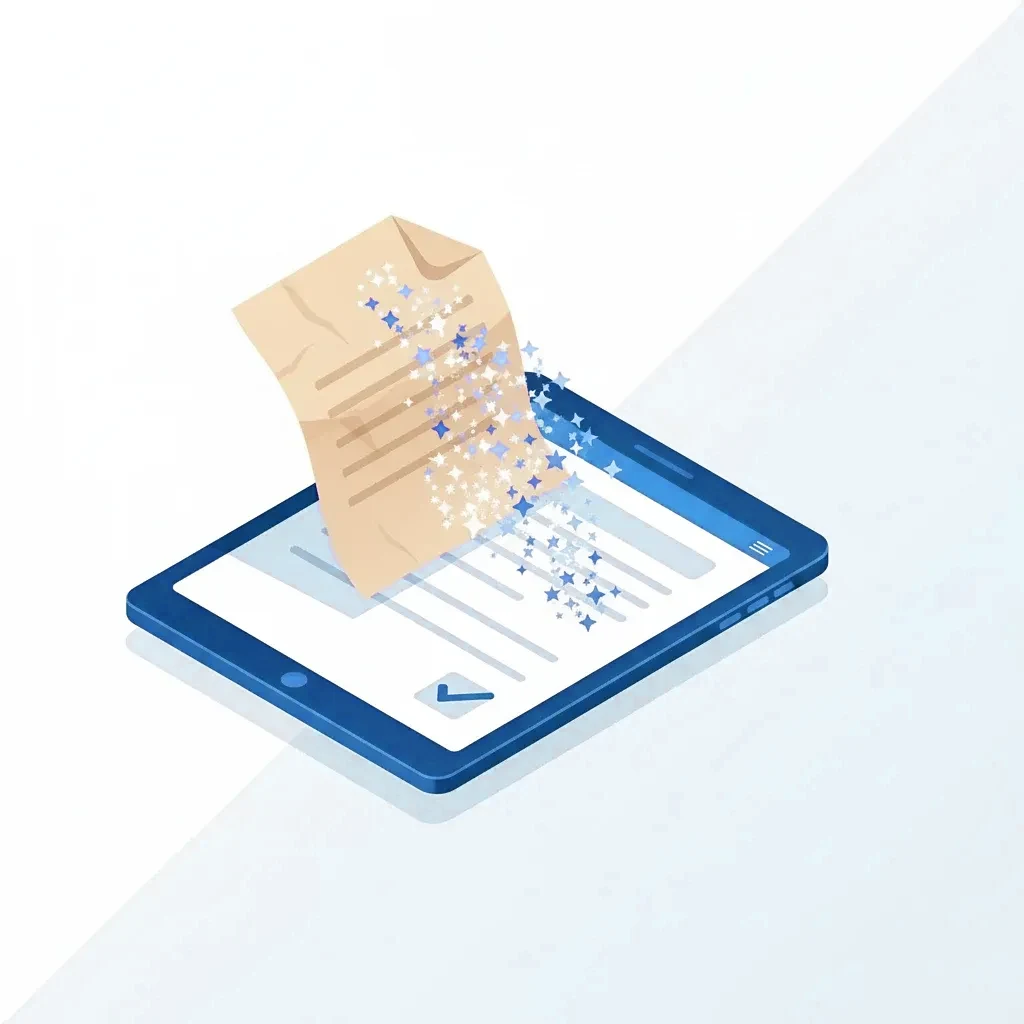
In Aprovo you upload a scanned PDF or DOCX of your current form, and the AI Form Creator (built on Google Gemini) recognises the document's structure — questions, text fields, checkboxes, sections — and builds a ready digital form out of it. You don't start from a blank page; you start from what you already have, just in a form you can edit, adapt to a jurisdiction, and sign on a tablet.
This isn't plain OCR dumping everything into one big text box. The system distinguishes which parts are questions needing a client's answer, which are one-way information (a paragraph to read), and which is the signature field — and reproduces that structure instead of handing back a wall of text to sort out by hand.
What's still on you
A recognised form is a starting point, not a finished product — it's worth reviewing it, checking nothing shifted, and adapting it to your actual jurisdiction if the original was written for different rules. It's still an order of magnitude faster than retyping by hand, but it doesn't excuse you from reading your own form after the conversion.
The practical takeaway
Going digital doesn't have to mean starting from zero. If the only reason you're still printing forms is that nobody wants to retype them, that specific problem is solved by uploading a file — not by weeks of work.
This article is for information only and is not legal advice.
Protect your business today
Try Aprovo free for 30 days and leave the paperwork behind.
Start your free trial