September 13, 2026
Your paper form uploads in minutes — including any Finnish statute it cites that never existed
Automatic recognition of a scanned form removes the worst part of going digital: retyping years of your own wording field by field. What it cannot do is notice that the wording was written for a country that is not Finland.
The reason a Finnish studio is still printing forms is almost never the price of software. It is the thought of rebuilding, question by question, a document that took six years to get right — the contraindications list, the aftercare wording, the clause added after one awkward phone call.
Why retyping is the real obstacle
A consent form is an accumulation of small corrections, each one made after something happened. Retyping it into a form builder is not an afternoon's work; it is an afternoon's work plus the risk of dropping the single line that exists because of an incident nobody wants repeated. Faced with that, staying on paper looks like the cheaper option, and for a while it is.
What the import actually does
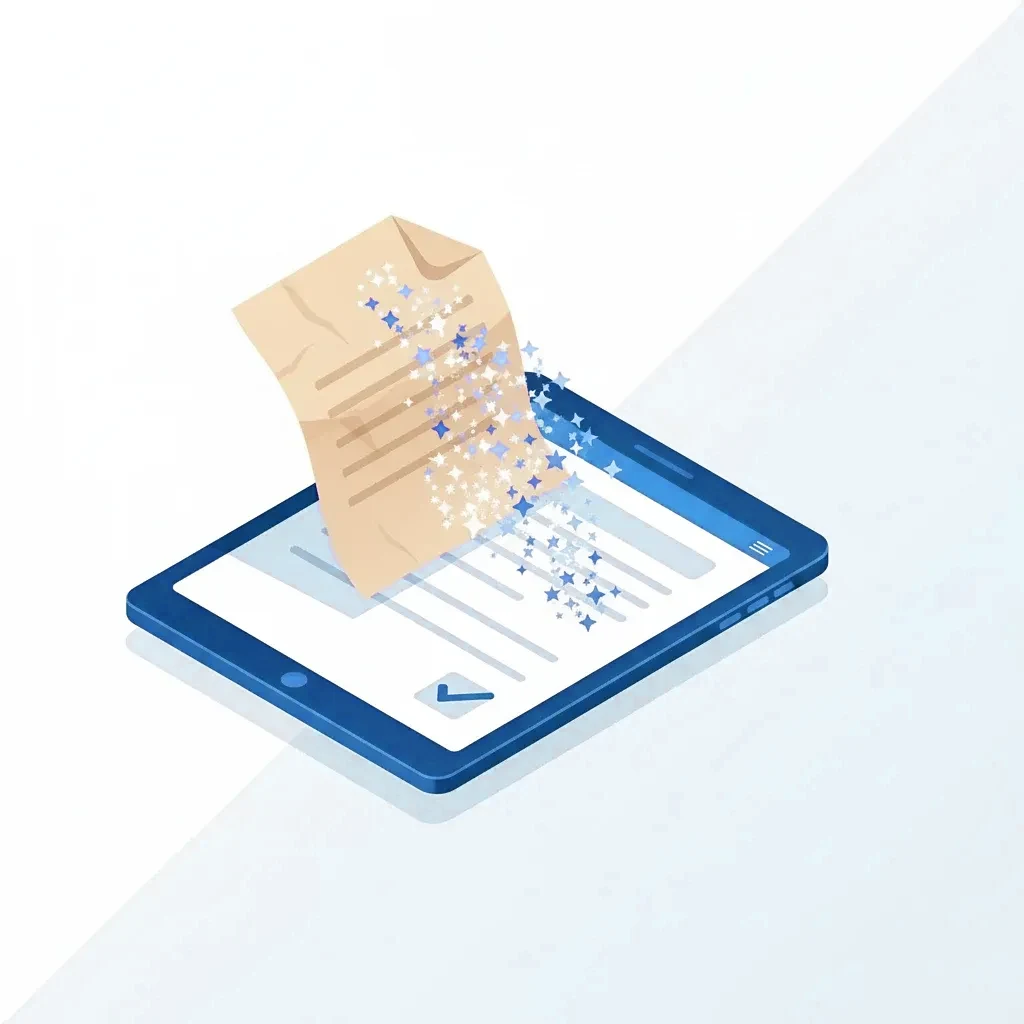
In Aprovo you upload the scanned PDF or DOCX you use today, and the AI Form Creator, built on Google Gemini, reads the document's structure rather than its pixels — separating the questions a client has to answer from the passages she only has to read, recognising checkboxes and sections, and locating the signature field. You start from the document you already trust, in a form you can edit and sign on a tablet, instead of from an empty template.
The three Finnish clauses worth re-reading afterwards
Recognition is faithful, and that is exactly the problem: an inaccurate clause survives the import intact. Three are worth checking line by line before a Finnish studio signs anything with the imported version.
Any sentence claiming a statutory age. Finland has no dedicated tattoo or piercing act, so a form asserting that "Finnish law requires clients to be 18" is citing nothing. The 18-year rule is defensible as studio policy, resting on section 24 of the Guardianship Act (laki holhoustoimesta, 442/1999) and the Consumer Ombudsman's decision KA 2003/41/2190 — but it has to be written as policy, not as legislation.
The retention line. A template written abroad will carry that country's period. Finland's general civil limitation is three years under the Act on the Statute of Limitations for Debts (laki velan vanhentumisesta, 728/2003), while dental records run to at least 12 years after the patient's death, or 120 years from birth where the date of death is unknown, under section 23 of the 703/2023 client data act — a gap no imported number is going to land on by accident.
The named supervisory authority. A privacy notice that names the wrong regulator is one of the easiest errors to carry across borders and one of the hardest for anyone to spot. In Finland it is the Office of the Data Protection Ombudsman (Tietosuojavaltuutetun toimisto), and nothing else.
The practical takeaway
Import solves the problem that actually keeps studios on paper, and solves it in minutes rather than weeks. It does not, and cannot, audit the document you hand it — so read the imported form once, with Finnish law in mind, and you get the six years of refinement without the borrowed mistakes.
This article is for information only and is not legal advice.
Protect your business today
Try Aprovo free for 30 days and leave the paperwork behind.
Start your free trial