September 13, 2026
Your consent form already exists — in Danish, on paper, and nobody wants to retype it
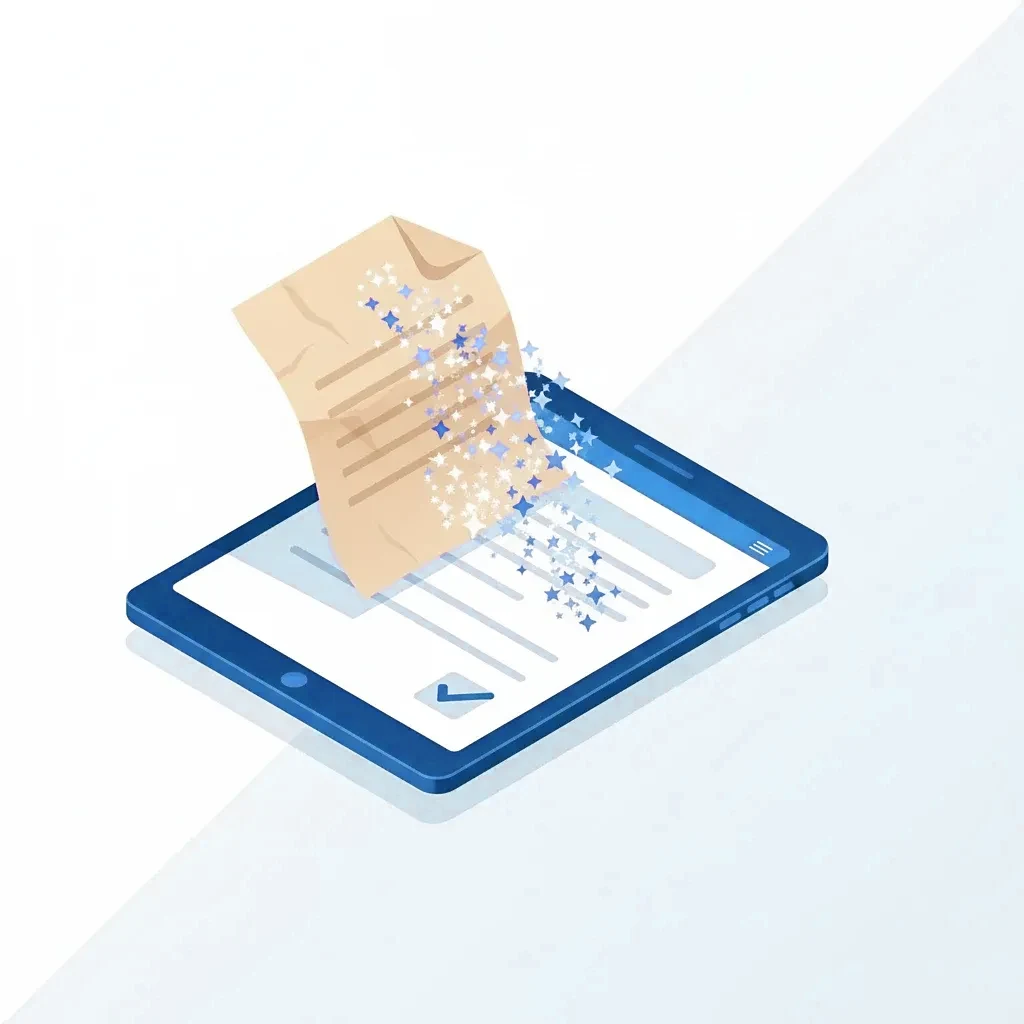
Going digital usually means rebuilding your own form field by field in someone else's editor. It doesn't have to: upload the file you print today, and the structure comes back as a form a client can sign on a tablet.
A studio that has been open in Aarhus for a decade is not starting from nothing. There is a form: the risk sheet that goes across the counter before anything happens, the health questions, the contraindications, the signature line at the bottom. It works. The only reason it is still being printed is that moving it into a digital system looks like an evening of typing nobody has.
Why the retyping is the obstacle, not the price
That form was not written in an afternoon. It is years of small corrections made after real situations — a question about blood thinners added after one awkward appointment, a sentence tightened after one complaint that went nowhere but could have gone somewhere. Copying it by hand into a new tool is not a half-hour job. It is a genuine risk of dropping the one line that once made the difference.
So studios stay on paper, not because they doubt the point of going digital, but because the switching cost looks higher than the cost of standing still.
What uploading the file actually gives back
In Aprovo you upload a scan or a DOCX of the form you already use, and the AI Form Creator (built on Google Gemini) recognises the document's structure — questions, free-text fields, checkboxes, sections — and builds a working digital form from it. Your starting point is the form you spent ten years refining, now editable, adaptable and signable on a tablet.
It reads structure rather than vocabulary, so a form written in Danish comes through as a Danish form: the recognition is looking at what is a question requiring the client's answer, what is one-way information for them to read, and where the signature belongs — not translating anything or guessing at legal meaning.
The parts that were never on the sheet in the first place
An import gives you back what was on the page, which is exactly why it is worth knowing what was not. Section 8 of the Tatoveringslov (LOV nr. 695 of 8 June 2018) requires written risk information to be given to the client before the tattoo is carried out — if your paper routine covered that verbally, the imported form inherits the gap rather than closing it. The ink traceability record under section 9 — supplier name and address, which inks went on which client, kept five years — is a studio obligation that lives beside the consent file, not inside it.
One more thing worth a read-through: if any part of your form came from a foreign template, check the piercing section. Templates written elsewhere routinely state a statutory minimum age for piercing. In Denmark there isn't one, and importing that sentence imports a claim about Danish law that is simply untrue.
The practical takeaway
Going digital does not have to mean starting from a blank page. If the only thing keeping your forms in the printer is that nobody wants to retype them, that specific problem is solved by uploading a file — but the review afterwards is still yours, and it is the cheapest hour you will spend.
This article is for information only and is not legal advice.
Protect your business today
Try Aprovo free for 30 days and leave the paperwork behind.
Start your free trial