November 15, 2026
Going paperless in Denmark: can you scan old consent forms and shred the originals?
Danish courts evaluate evidence freely: a scan counts, but the court decides how much. When a client disputes the signature, it is the original that gets examined. What to scan, keep and shred.
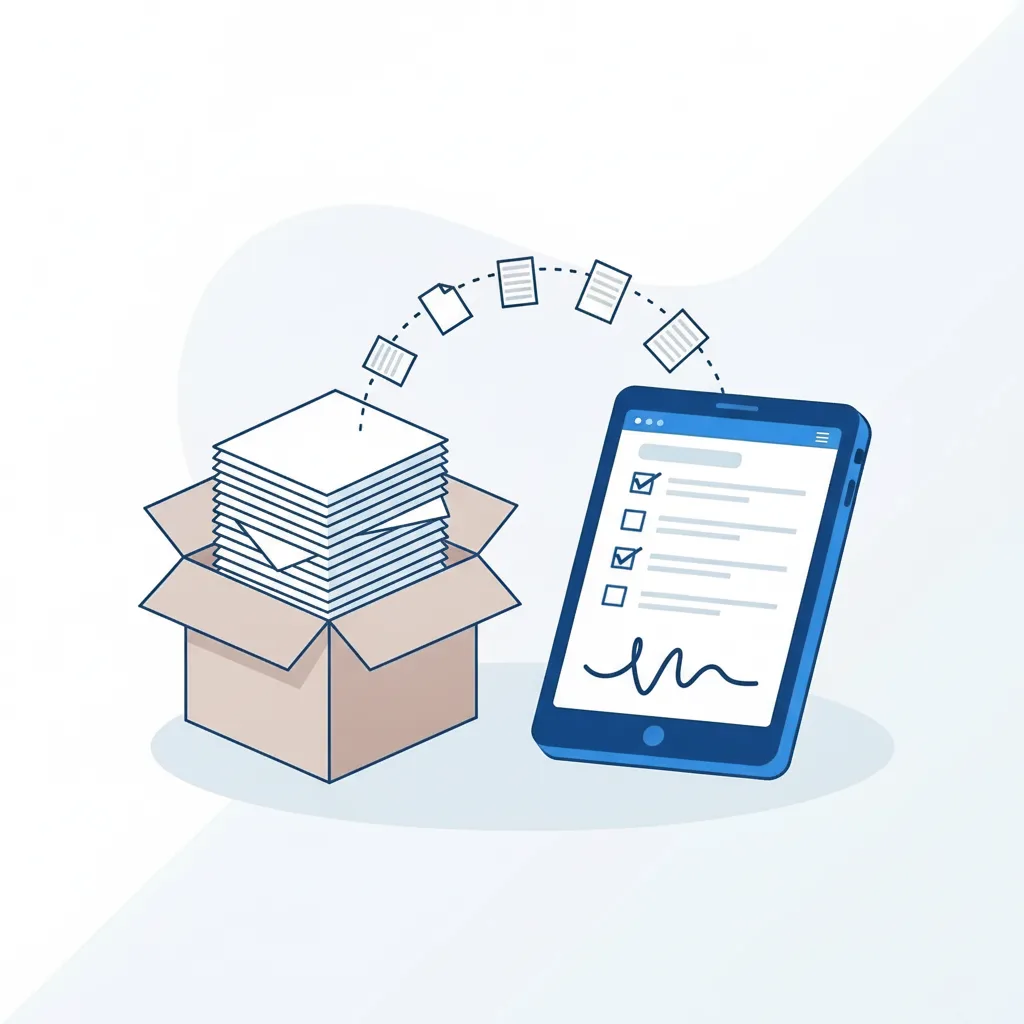
The first question after moving to a tablet is rarely about new clients. It is about the cupboard: years of signed paper forms. Scan and shred? Keep? That depends on what a scan proves if a complaint arrives.
Free evaluation of evidence
Danish civil procedure rests on the free evaluation of evidence (section 344(1) of the Administration of Justice Act, retsplejeloven): the court decides what a piece of evidence is worth. A scan of a signed form can therefore be used as evidence. As long as nobody disputes the signature, the difference is small. If the client says "I never signed that", an expert examines the original.
Tattoo places and clinics have their own periods
- A registered tattoo place keeps its records of colours and supplier for five years (section 9 of the Tattoo Act).
- Authorised health professionals keep patient records under the Journalføringsbekendtgørelsen (BEK nr. 530 of 24 May 2018) for at least ten years. Records may be kept electronically; if paper records are scanned, the process must make sure the copy is faithful to the original.
What to do with the cupboard
- Forms tied to an open complaint: keep the original, no exceptions.
- Forms inside the retention period: keeping the original is the safest option. The scan is a convenient working copy, not a replacement.
- Forms past the retention period: shred securely, ideally with a receipt. Keeping health data "just in case" breaches the storage limitation principle in Article 5 GDPR, which the Danish Datatilsynet enforces.
The periods in detail are in our article on how long to keep consent forms in Denmark.
New forms do not have the problem
A form signed on a tablet has no paper original waiting in a cupboard. The file is the original.
How Aprovo handles it
Every form is created as an archival PDF/A-2b with a SHA-256 checksum and the signing time. You can import your current form from PDF or DOCX, so clients sign the same wording on the tablet as on paper. Aprovo does not scan your old paper — that archive stays where it is until its retention period ends.
In short
A scan is evidence; the original is stronger evidence. Keep paper until the period ends, then shred it with a record. Sign new forms digitally and the question disappears.
This article is for information only and is not legal advice.
Protect your business today
Try Aprovo free for 30 days and leave the paperwork behind.
Start your free trial