September 13, 2026
Your Swedish consent form has to change by 1 February 2026 — that is not a reason to retype it from scratch
New hygiene advice from Socialstyrelsen gave every Swedish studio a reason to revisit its paperwork. The obstacle is never the rules themselves — it is the thought of typing a form you spent years refining into a drag-and-drop builder, field by field.
Swedish studios have a very concrete reason to open their consent paperwork: since 1 February 2026 Socialstyrelsen's general advice HSLF-FS 2025:62 has applied, replacing the general advice studios had worked under since 2006. It is a set of recommendations, not a binding regulation, but it is what municipal inspectors work from — and it is not dramatic. The prospect of rewriting the form to match them is what stops people.
The form is years of small fixes, not a template
The questionnaire in use today was not written in an afternoon. It grew: a question about blood thinners added after one awkward appointment, a line about aftercare tightened after one complaint, a paragraph about what the studio will not do added after one argument. Retyping that into a new system by hand is not a half-hour task — it is a real chance of losing the one line that once saved someone a difficult conversation.
So the form stays on paper, and the deadline gets handled with a printed insert stapled to the back of the old sheet.
What automatic recognition changes
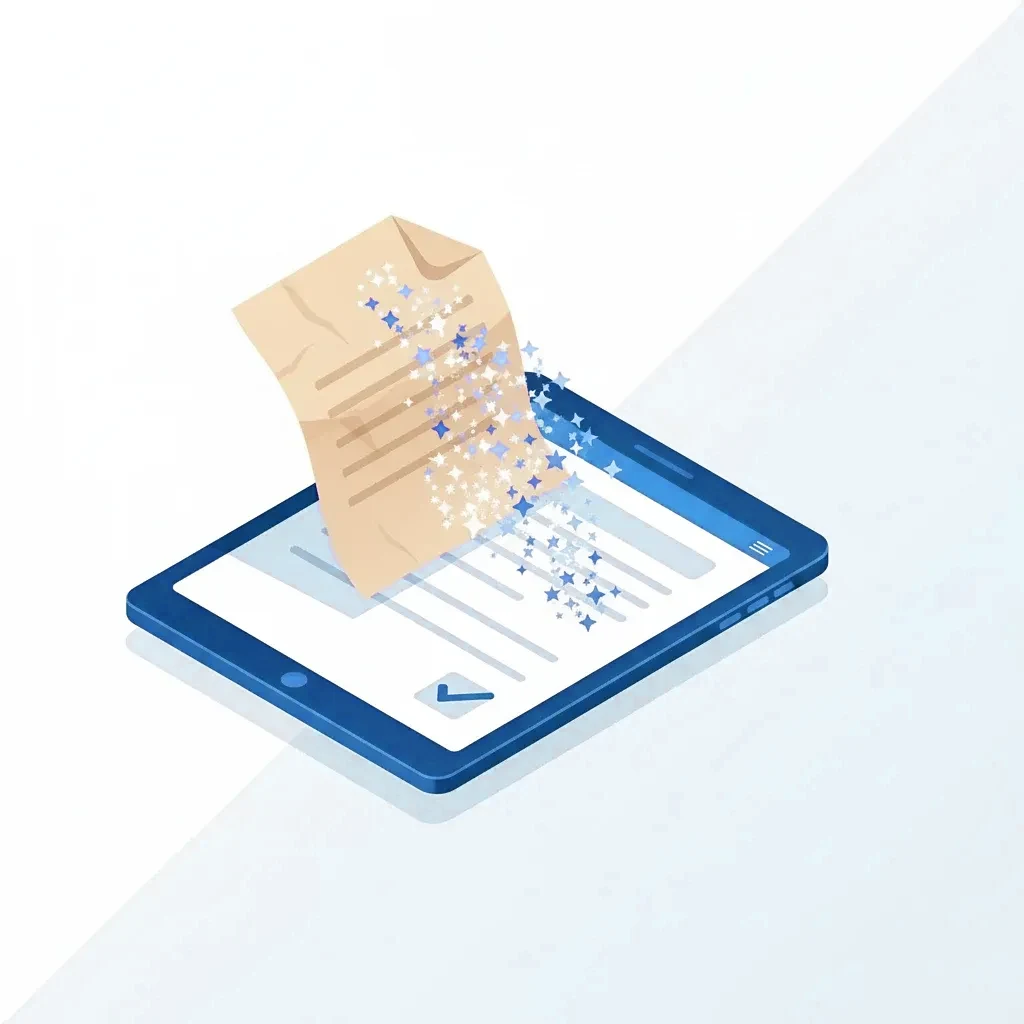
In Aprovo you upload a scan of the current form as PDF or DOCX, and the AI Form Creator (built on Google Gemini) reads the document's structure — questions, free-text fields, tick boxes, sections, the signature block — and produces an editable digital form from it. You are not starting from an empty page; you are starting from the document you already trust, in a shape you can adjust and sign on a tablet.
It is not plain OCR emptying everything into one text box. The system separates what is a question the client must answer, what is one-way information to read, and what is the place a signature goes, and rebuilds that structure instead of returning a wall of text to sort out by hand.
Three Swedish things worth checking after the import
An imported form is a starting point, and in Sweden three specific parts deserve a look. First, whether the aftercare text actually covers the three points HSLF-FS 2025:62 recommends in writing after the procedure: the particular aftercare needed, how to handle the treated area, and who to contact if complications appear. Second, whether any age limit printed on the form is presented as a legal requirement — Sweden has no statutory minimum age for tattooing or piercing, so a number on the form is studio policy and should read as one. Third, whether the identity field asks for a personnummer because the purpose genuinely demands it, or only because the old paper version happened to have a box for it.
The practical takeaway
New general advice with a date on it is a good reason to reread your own form, and a terrible reason to retype it. Upload what you have, fix the three things Swedish law actually cares about, and spend the saved afternoon on the wording rather than on the typing.
This article is for information only and is not legal advice.
Protect your business today
Try Aprovo free for 30 days and leave the paperwork behind.
Start your free trial